Does Website Accessibility Design Really Matter in 2026?
If you are a business owner or a digital manager, you are likely looking at your digital roadmap for the remainder of the year.
Perhaps you’ve focused heavily on AI integration or scaling your lead generation. But there is one question that continues to surface in boardrooms and strategy sessions across the UK: Does website accessibility design really matter in 2026?
The short answer is yes. In fact, it matters more now than it ever has.
We are no longer in an era where accessibility is a "nice-to-have" feature or a checkbox for the HR department. In 2026, accessibility is a material business concern that directly impacts your revenue, your legal standing, and your brand’s reputation.
At Nicola Lonie, we focus on helping businesses build scalable digital infrastructure that doesn’t just look good, but works for everyone. If your website isn't accessible, you are effectively locking your front door to a massive portion of your potential market.
The 2026 Regulatory Cliff: Why "Later" is No Longer an Option
For years, many private businesses treated accessibility guidelines like suggestions. That changed as we approached 2026.
As of April 24, 2026, new regulatory deadlines have come into sharp focus. Large public entities and many organisations serving the public are now required to comply with WCAG 2.1 Level AA standards. The Department of Justice and international regulatory bodies have established this as the binding technical standard for digital content.
But don’t make the mistake of thinking this only applies to government sites.
In 2025 alone, there were over 5,114 ADA-related lawsuits filed regarding digital accessibility. For private businesses, the legal risk is no longer theoretical; it is a clear and present financial danger.

The Economic Reality of Inclusive Design
Beyond the fear of a lawsuit, there is a much more positive reason to prioritise accessibility: Growth.
When a website is designed inclusively, it removes friction. When you remove friction, you increase conversions. It is that simple.
Consider these facts:
The "Click-Away" Pound: Roughly 70% of users with access needs will leave a website if it is difficult to use.
Market Expansion: By ignoring accessibility, you are ignoring up to 20% of the population who live with some form of disability.
Brand Loyalty: Customers in 2026 value social responsibility. A site that is demonstrably inclusive builds immediate trust.
If your site features missing image descriptions (alt-text), non-keyboard-navigable menus, or videos without captions, you are losing money. You are essentially paying for traffic through SEO and ads, only to turn users away at the finish line because they can't click the "buy" button.
The Hidden SEO Advantage
Many people view accessibility and SEO as two different departments. In reality, they are two sides of the same coin.
Search engines in 2026 are more sophisticated than ever. They prioritise user experience (UX) above almost everything else. The same elements that make a site accessible: proper heading hierarchies, descriptive link text, and clean navigation: are the exact elements that help you rank on Google.
For example, when Nicola Lonie audits a website, we look for a clear structure.
A screen reader uses headings to help a visually impaired user navigate a page. Google’s bots use those same headings to understand the context of your content. If you fix one, you improve the other.
By investing in accessibility, you are essentially performing a massive technical SEO upgrade at the same time.

Why 94.8% of Websites are Currently Failing (And Why That’s Your Opportunity)
Research shows that a staggering 94.8% of websites fail to meet basic accessibility standards.
This is a failure of strategy, but it is also a massive opportunity for you. In a crowded digital marketplace, how do you stand out? You provide a better experience than your competitors.
If your competitor's site is a nightmare for someone using a screen reader or a voice-command interface, and your site is seamless, where will that customer go?
They will go to the brand that made their life easier.
Accessibility isn't about "fixing bugs." It's about digital excellence. It’s about ensuring that your strong website is a tool for connection, not a barrier.
The Stress of Non-Compliance
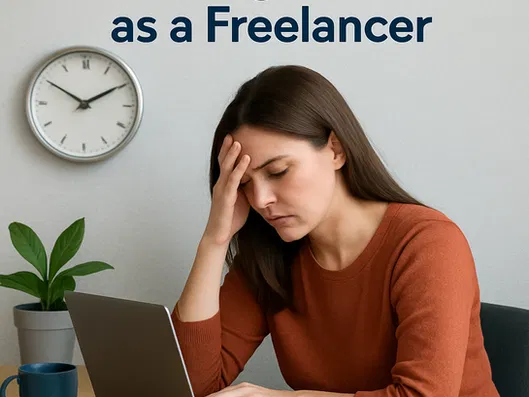
Managing a business in 2026 is already complex. Between AI transitions and shifting market demands, the last thing you need is a legal demand letter sitting on your desk because your website isn't compliant.
The stress of "catching up" is always higher than the cost of doing it right the first time. Many business owners feel overwhelmed by the technical jargon of WCAG 2.1 or 2.2. They see it as a mountain they don't have the tools to climb.
This is where expert guidance becomes invaluable. You don't need to become an accessibility expert; you just need to partner with one.
Nicola Lonie specializes in taking these complex requirements and turning them into practical, actionable digital strategies. We move accessibility from a source of stress to a source of competitive advantage.
Practical Steps to Take Right Now
If you are wondering where to start, you don't have to overhaul your entire digital presence overnight. Start with the "low-hanging fruit" that offers the biggest impact.
Run an Accessibility Audit: Use automated tools to find the obvious errors, but remember that automation only catches about 30% of issues. You need a human expert to review the user flow.
Fix Your Navigation: Ensure your site can be fully navigated using only a keyboard. This is a primary requirement for accessibility and a common point of failure.
Contrast and Readability: Ensure your text stands out against the background. This doesn't just help people with visual impairments; it helps everyone reading your site on a mobile device in bright sunlight.
Alt-Text for Images: Don't just describe the image for the sake of it. Describe the purpose of the image.
Caption Everything: If you use video, captions are mandatory. Many users watch video without sound anyway: especially in office environments or on public transport.
Implementing these changes can be integrated into your existing workflows, much like how AI can save you 10 hours a week by automating repetitive tasks. Accessibility is an investment in your site's future-proofing.
The Future of Digital Inclusion
As we move further into 2026, the definition of "accessibility" will continue to expand. We are seeing more focus on neurodiversity: designing sites that aren't overwhelming for users with ADHD or autism. This means cleaner layouts, less "clutter," and more predictable navigation.
This shift towards Inclusive Design benefits every single user.
Think of it like the "curb cut effect." Sidewalk ramps were designed for wheelchair users, but they made life easier for parents with strollers, travellers with luggage, and cyclists.
When you design for the "edges" of your user base, you improve the experience for the "middle" as well.
Summary: The Benefits of Acting Now
Prioritising accessibility in 2026 is one of the smartest strategic moves you can make. It protects your business, expands your reach, and sharpens your technical edge.
✔ Legal Safety: Avoid the rising tide of accessibility-related lawsuits and meet the April 2026 deadlines. ✔ Increased Revenue: Stop losing the "Click-Away" pound and open your doors to 20% more customers. ✔ SEO Boost: Align your site with search engine algorithms that reward high-quality, structured UX. ✔ Brand Reputation: Position your business as an inclusive, forward-thinking leader in your industry. ✔ Better UX for All: Create a cleaner, faster, and more intuitive experience for every visitor.
Let’s Make Your Website Work for Everyone
If your current digital strategy hasn't accounted for the 2026 accessibility standards, now is the time to pivot. Whether you are a community organisation or a growing business, the digital landscape is changing, and staying still is the same as falling behind.
At Nicola Lonie, we provide the clarity and expertise needed to navigate these transitions. We don't just point out the problems; we build the systems to solve them.
Ready to ensure your website is compliant, inclusive, and ready for growth?
Let’s have a conversation about your digital strategy today. Visit nicolalonie.co.uk to learn more about how we can help you scale with confidence.


Comments